

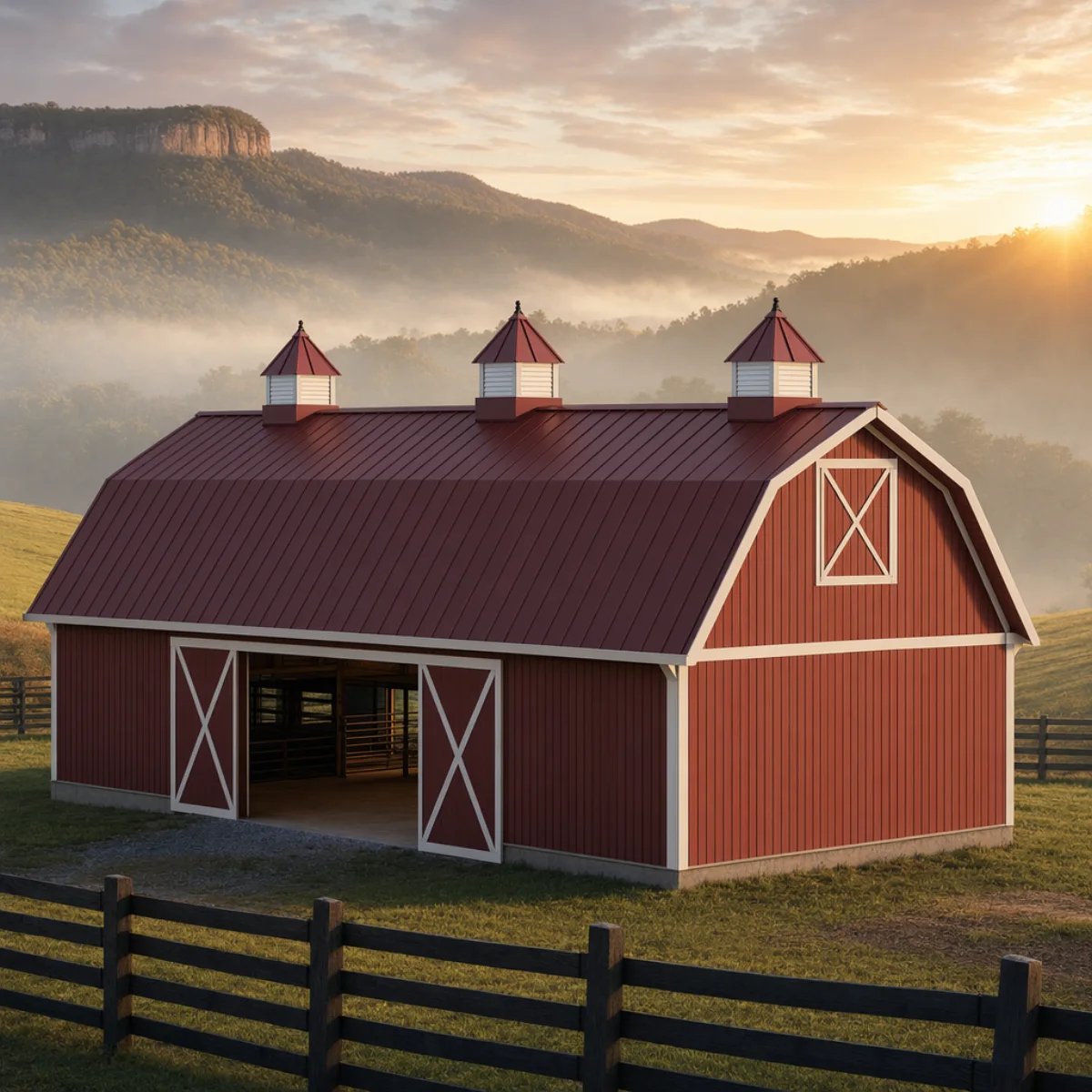
Finish the roofline, and let the barn breathe
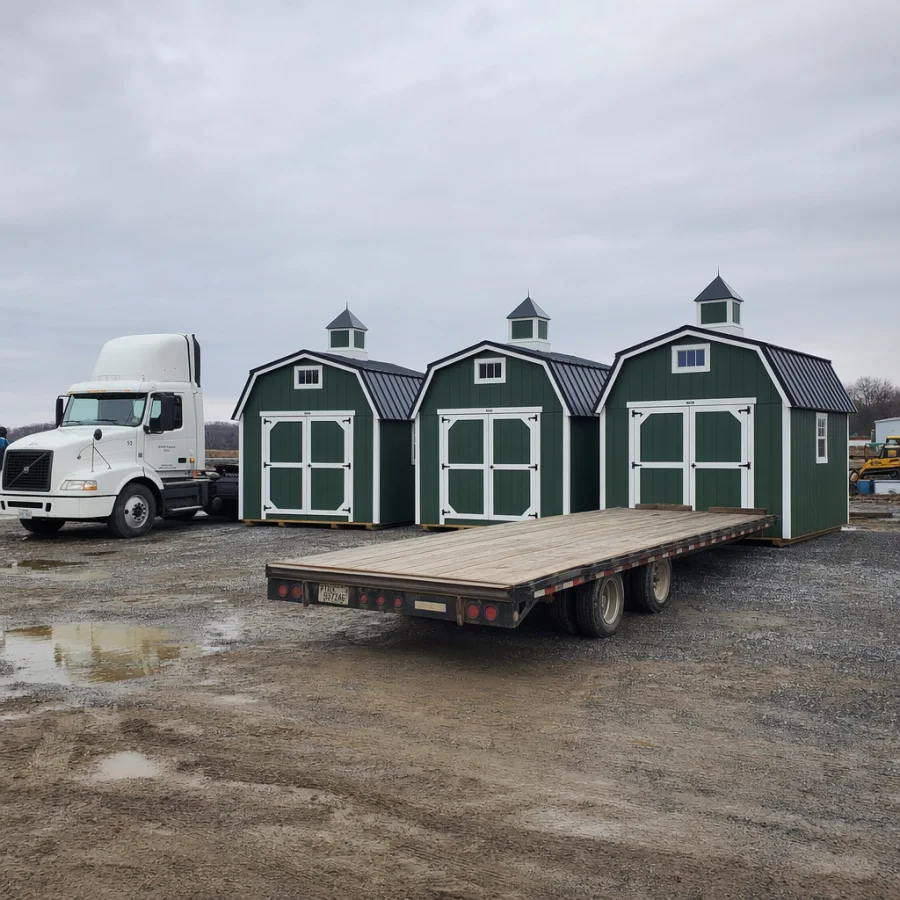
Compare real rooflines, vented and decorative styles, and proportions that work on pole barns of different sizes.
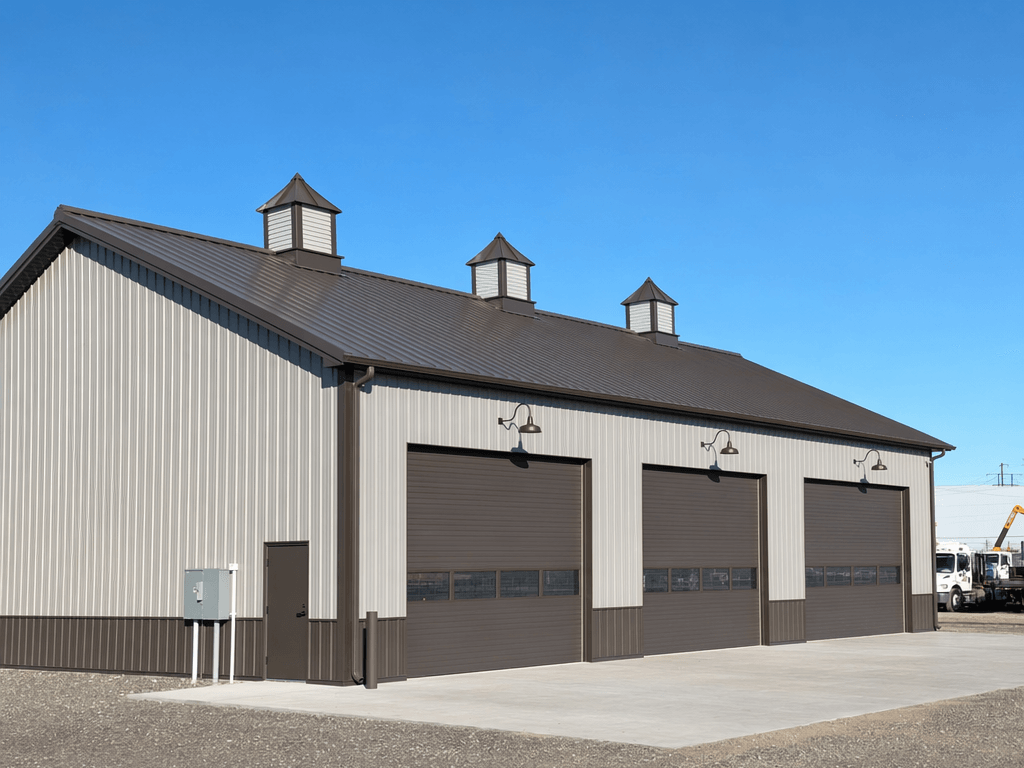
Find the closest roofline before you quote.
All pole barn gallery items shown.
Start with the job, then fit the roofline
Three decisions get you from a gallery photo to the right cupola for your barn.
Best starting point
Classic or Select suits most working barns. Choose Signature when the cupola is decorative and the windowed look matters more than airflow.
Choose the job
Classic and Select vent when the barn has enough low intake. Signature uses window panels and does not vent.
Plan the roofline
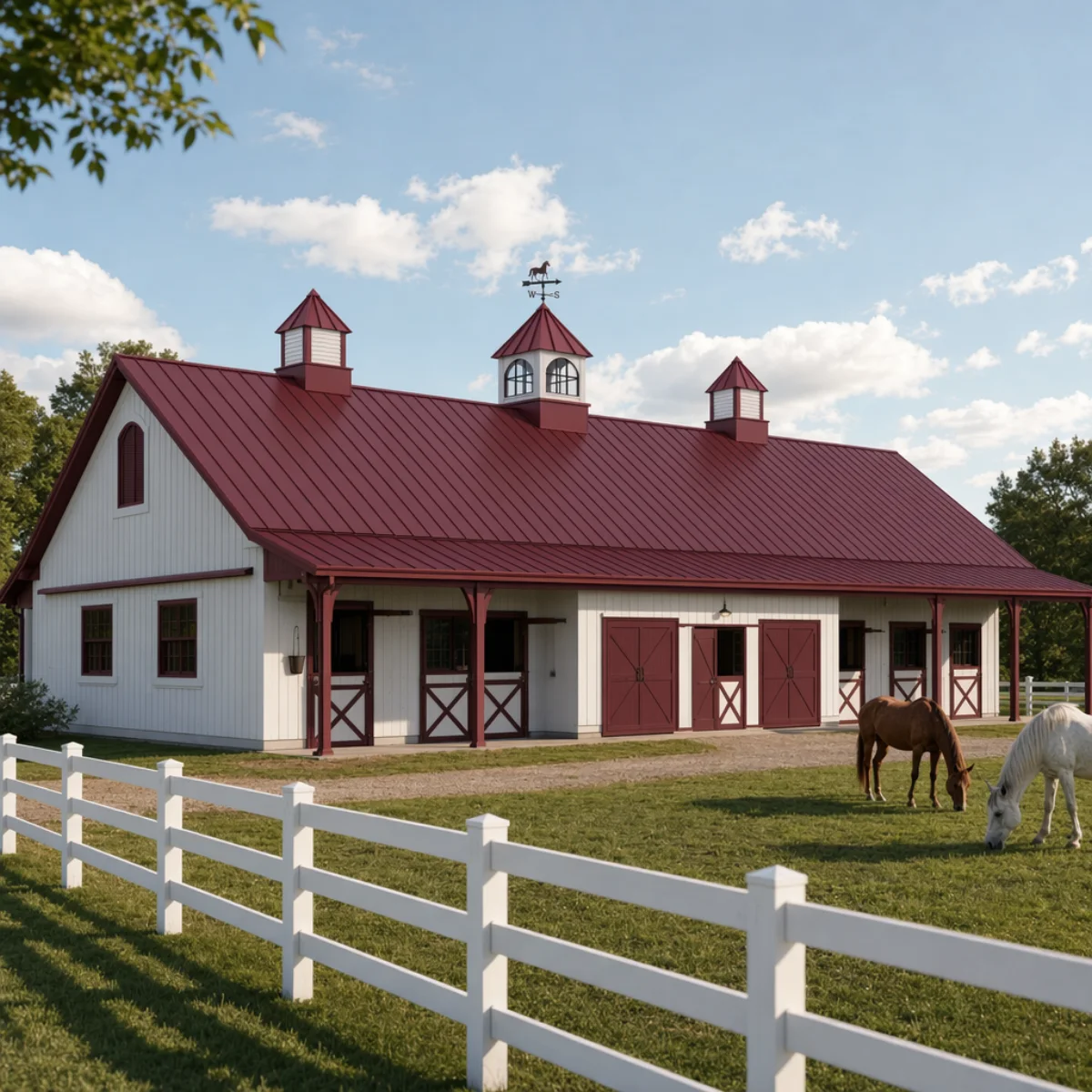
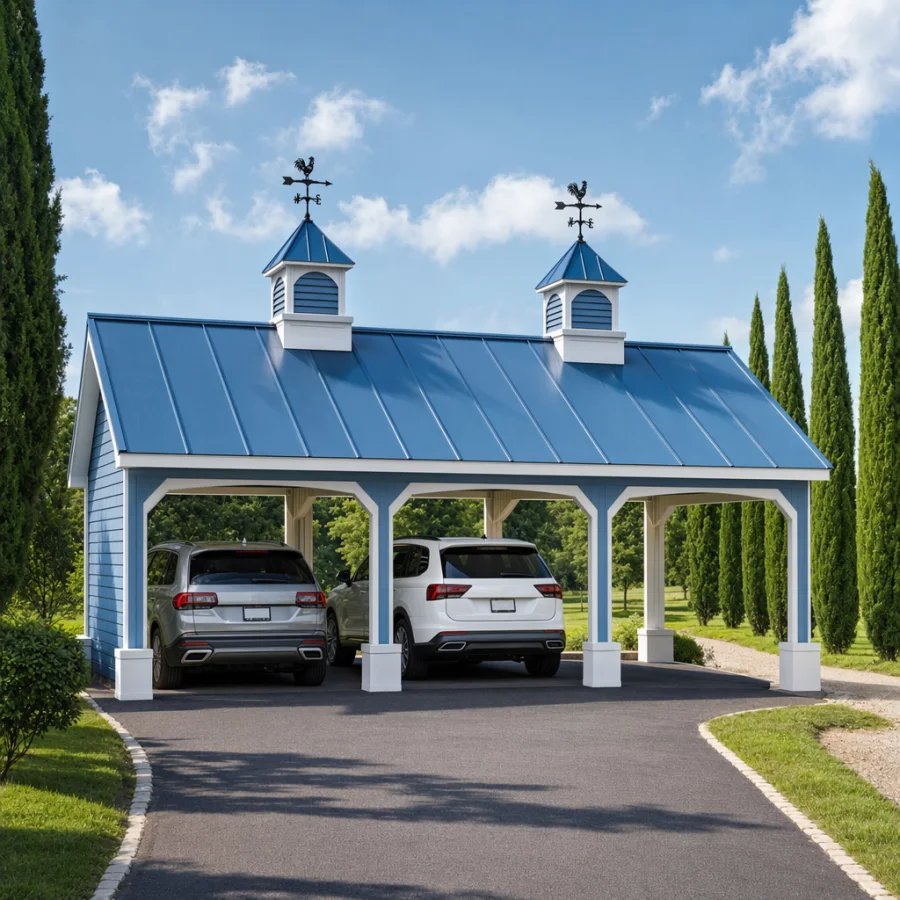
Size to the building width and ridge length. A long barn may look better with two matched cupolas than one undersized center point.
Size it for the roof, not the ground
Cupolas look larger in the driveway than they do on a roof. Start with the building dimensions, then preview the proportion before ordering.
Send your building width and photos with a quote and we confirm the scale before anything is built.

- Too smallGets lost once it reaches roof height.
- BalancedReads clearly without taking over the building.
- Too largeOverpowers the roof instead of finishing it.
- Match the building. Size for the roof width and ridge length.
- Plan the quantity. Long ridges may look better with two matched cupolas.
- Account for height. Tall or steep roofs can visually shrink a cupola.
What a cupola does on a pole barn
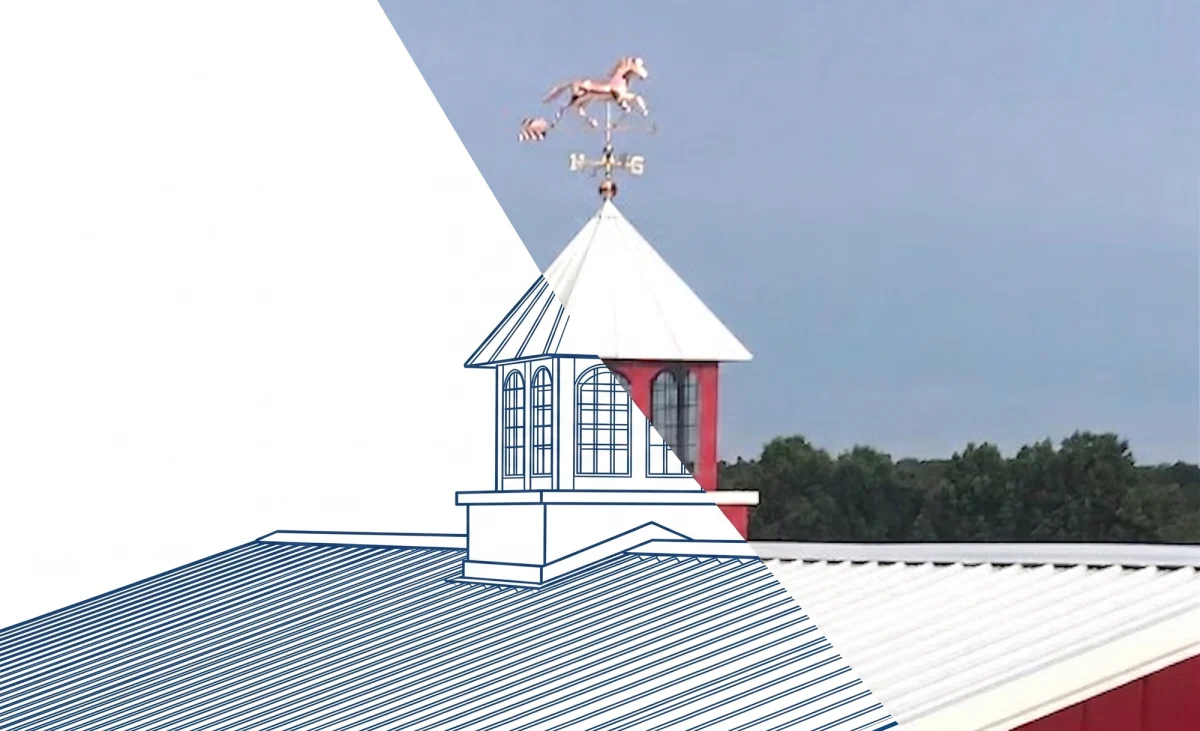
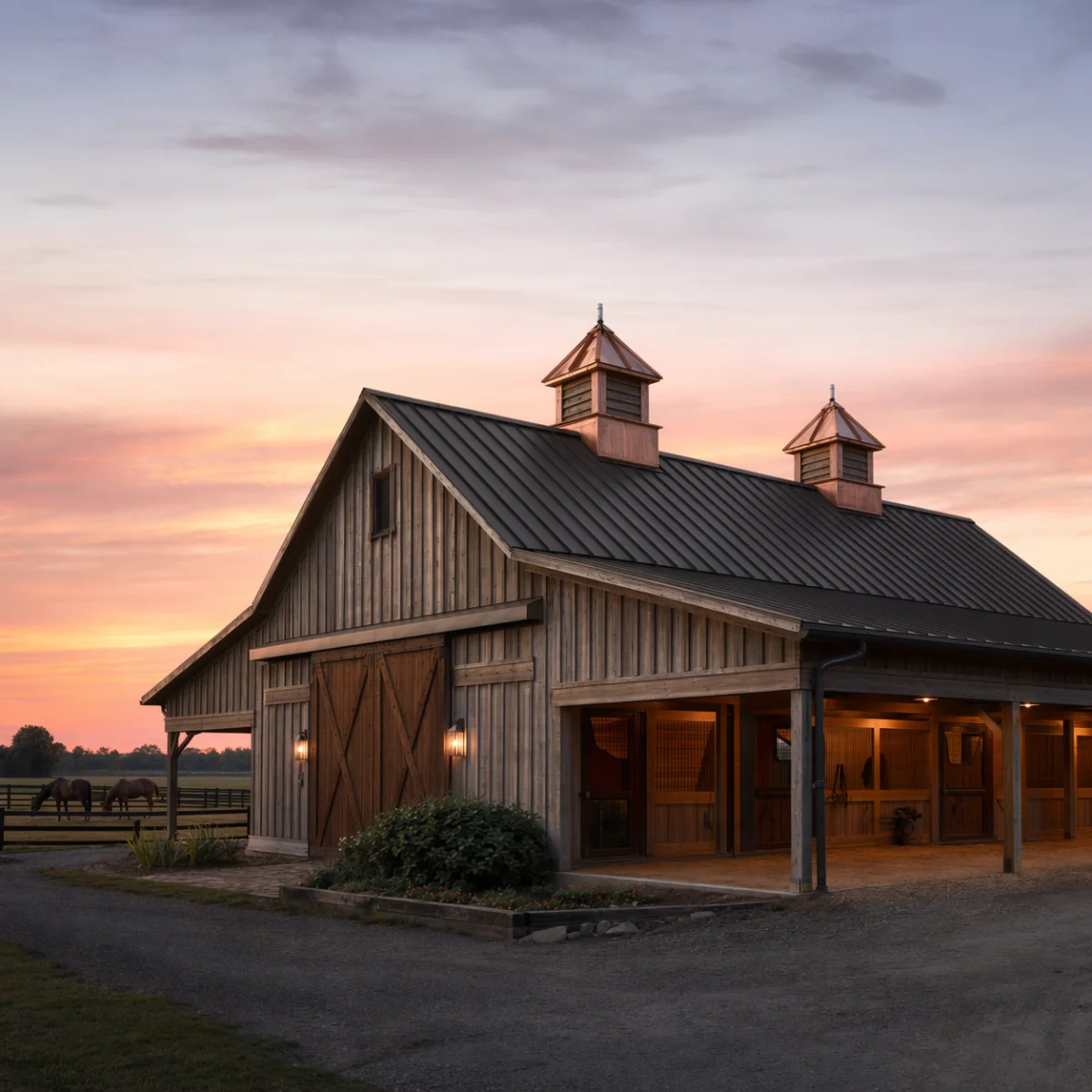
A cupola is the boxed accent that sits at the peak of the roof. On a pole barn a louvered one does two jobs at once: it gives warm, damp air a high point to escape, and it breaks up a long, plain roof plane with a finished crown.
A pole barn is a post-frame building: poles set in the ground carry the roof, with open span underneath and a simple gable roof on top. That roof is usually one clean, uninterrupted plane, which is exactly what makes a cupola read so well on it.
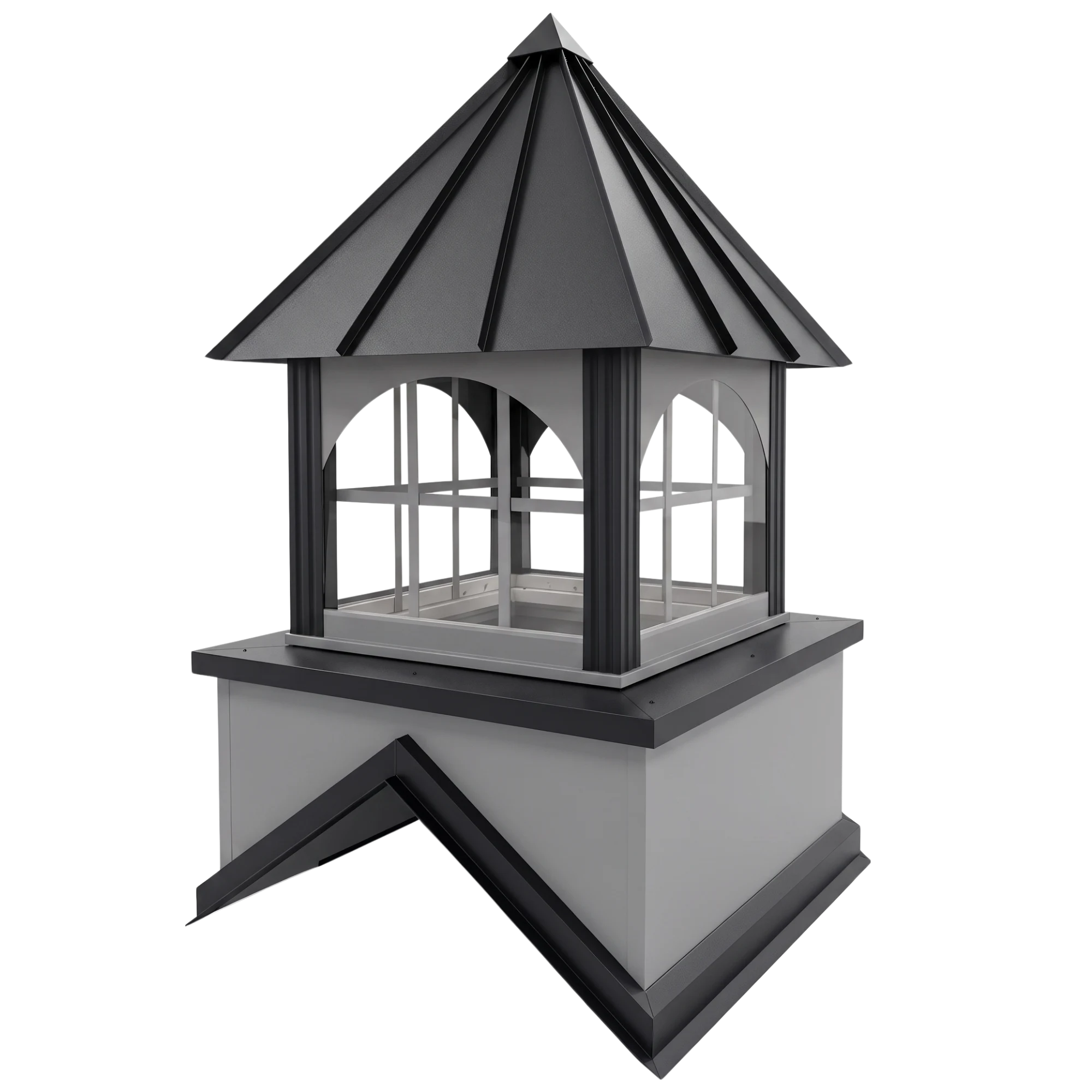
The working value is air, and it comes down to the panels. A louvered cupola is a high exhaust point. Warm air rises, exits through the louvers, and carries moisture with it. A windowed cupola does not vent: it is there for the look.
Sized right and paired with low intake, a louvered cupola earns its place on a working barn. It is not just a topper. It is the vent that finishes the roof.
How it finishes a simple roof plane
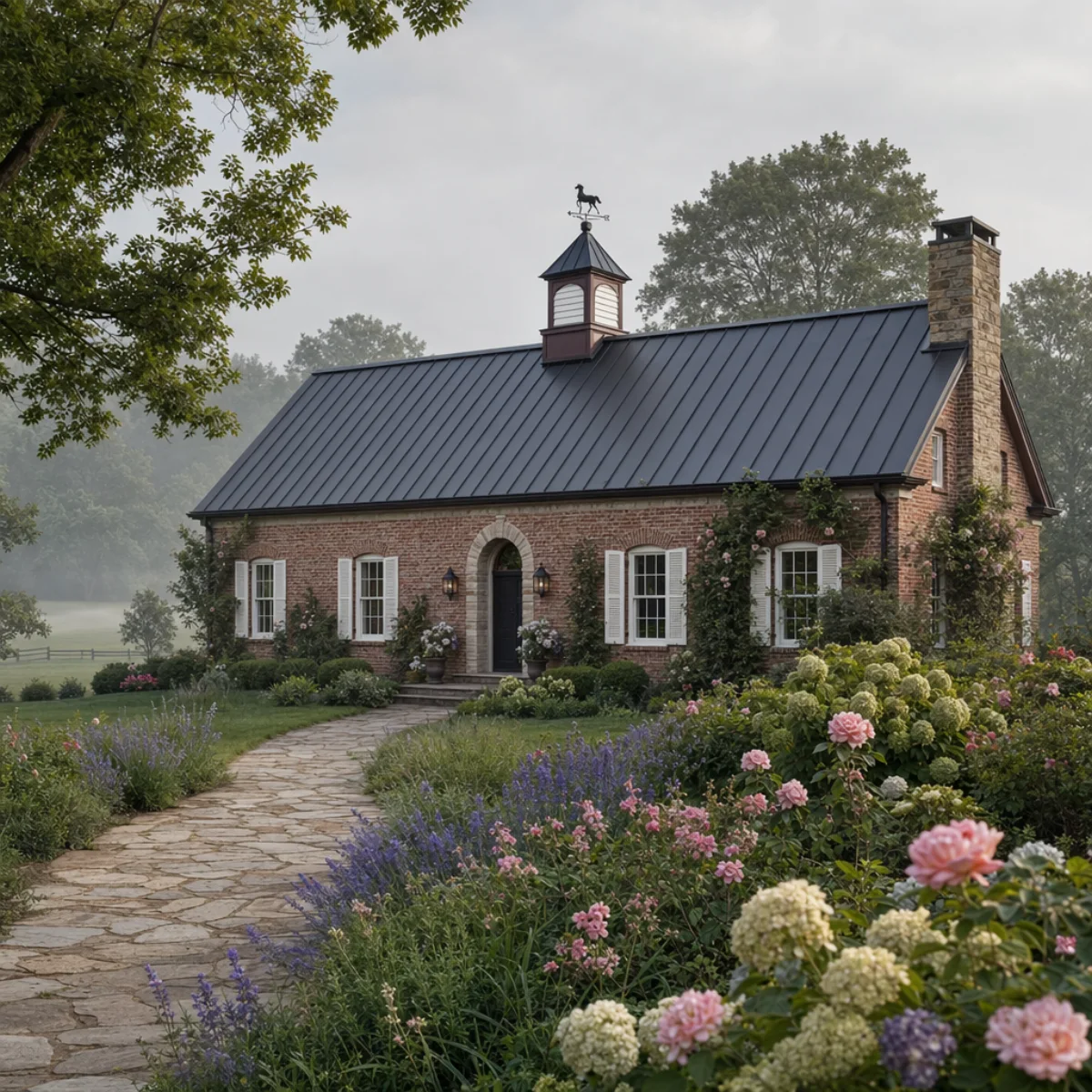
A long gable roof can look flat and unbroken. A cupola gives it a center of gravity and a finished peak, the same way a chimney or a dormer would on a house. That part is true whether you choose louvered or windowed.
Three styles, and which ones vent
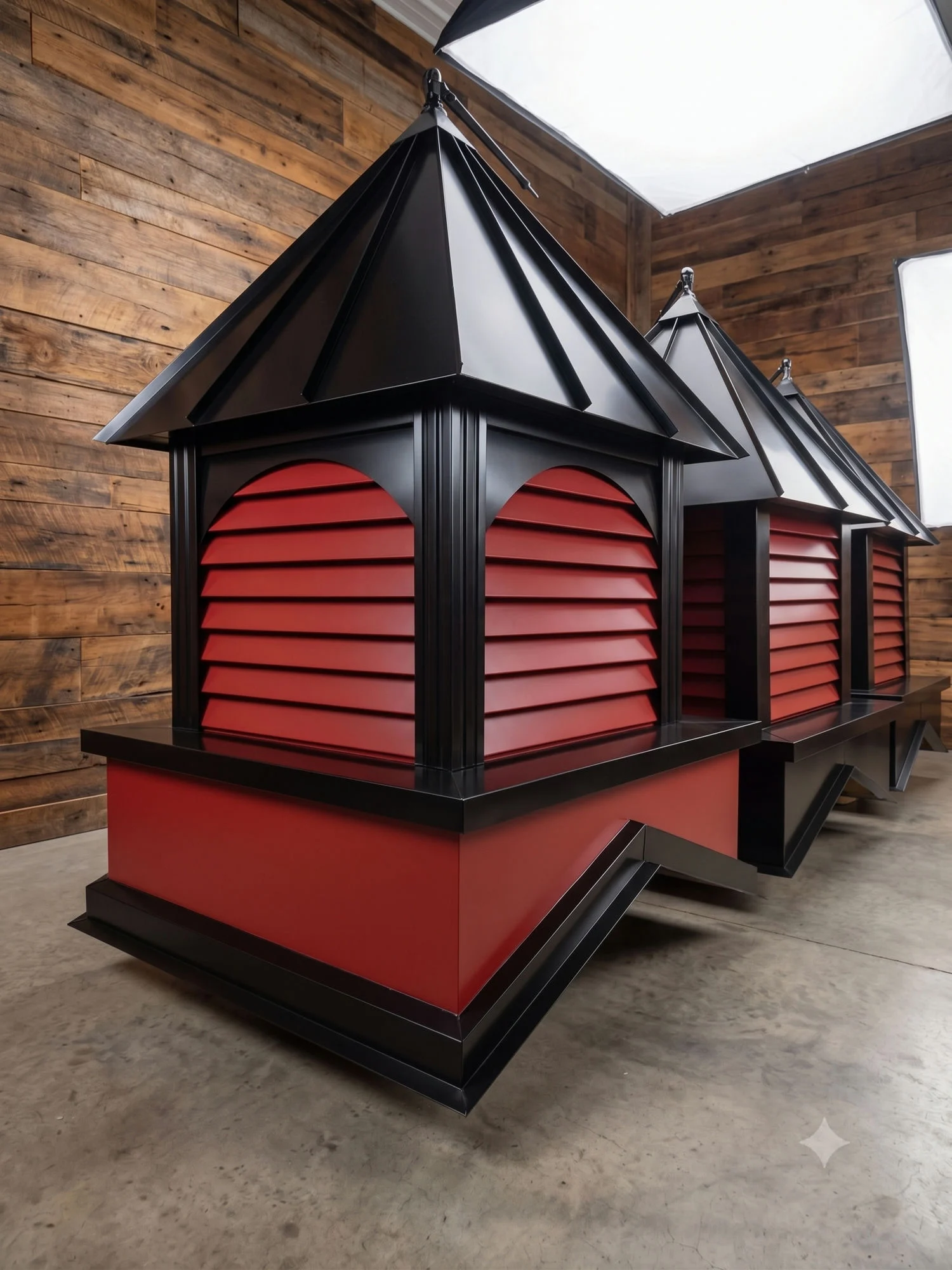
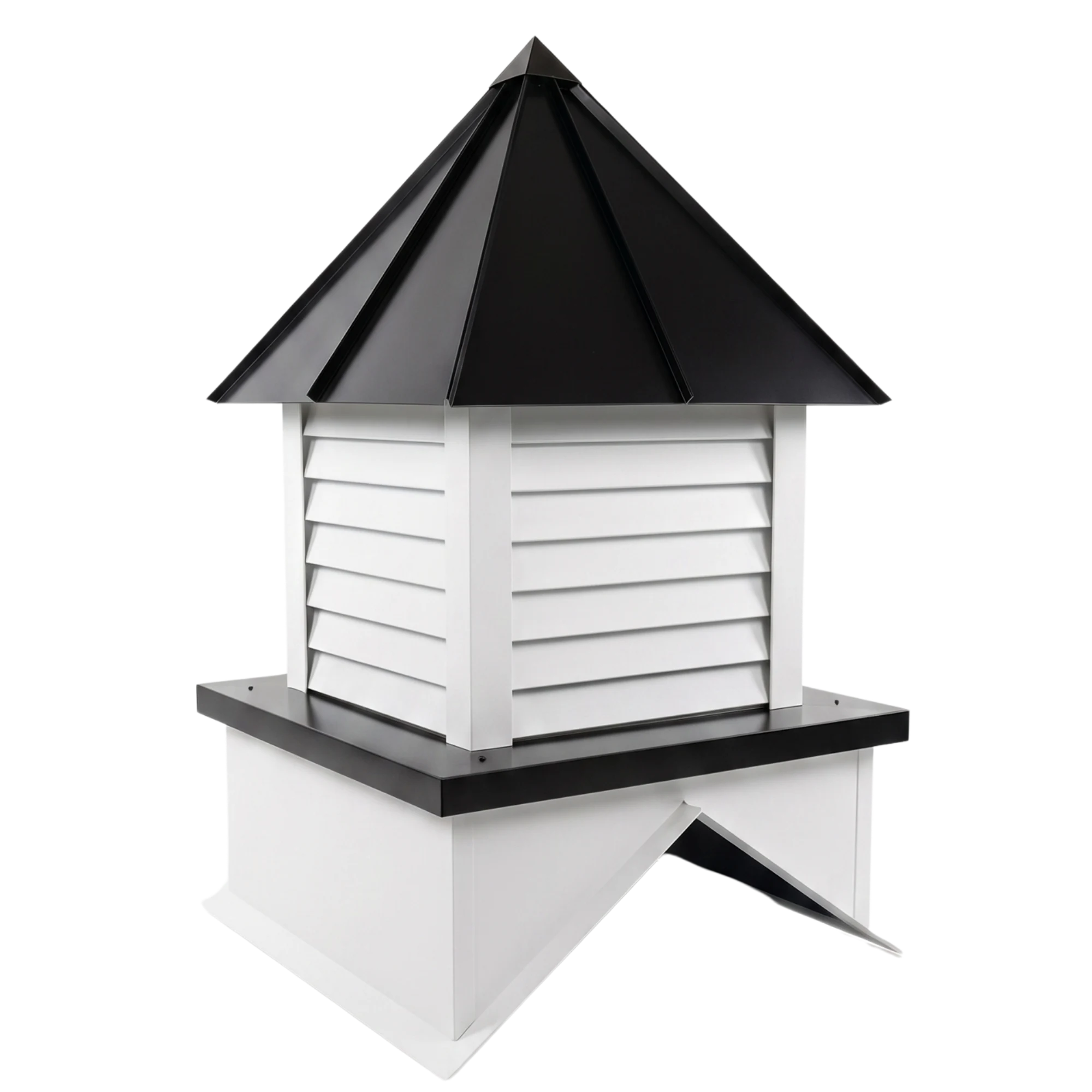
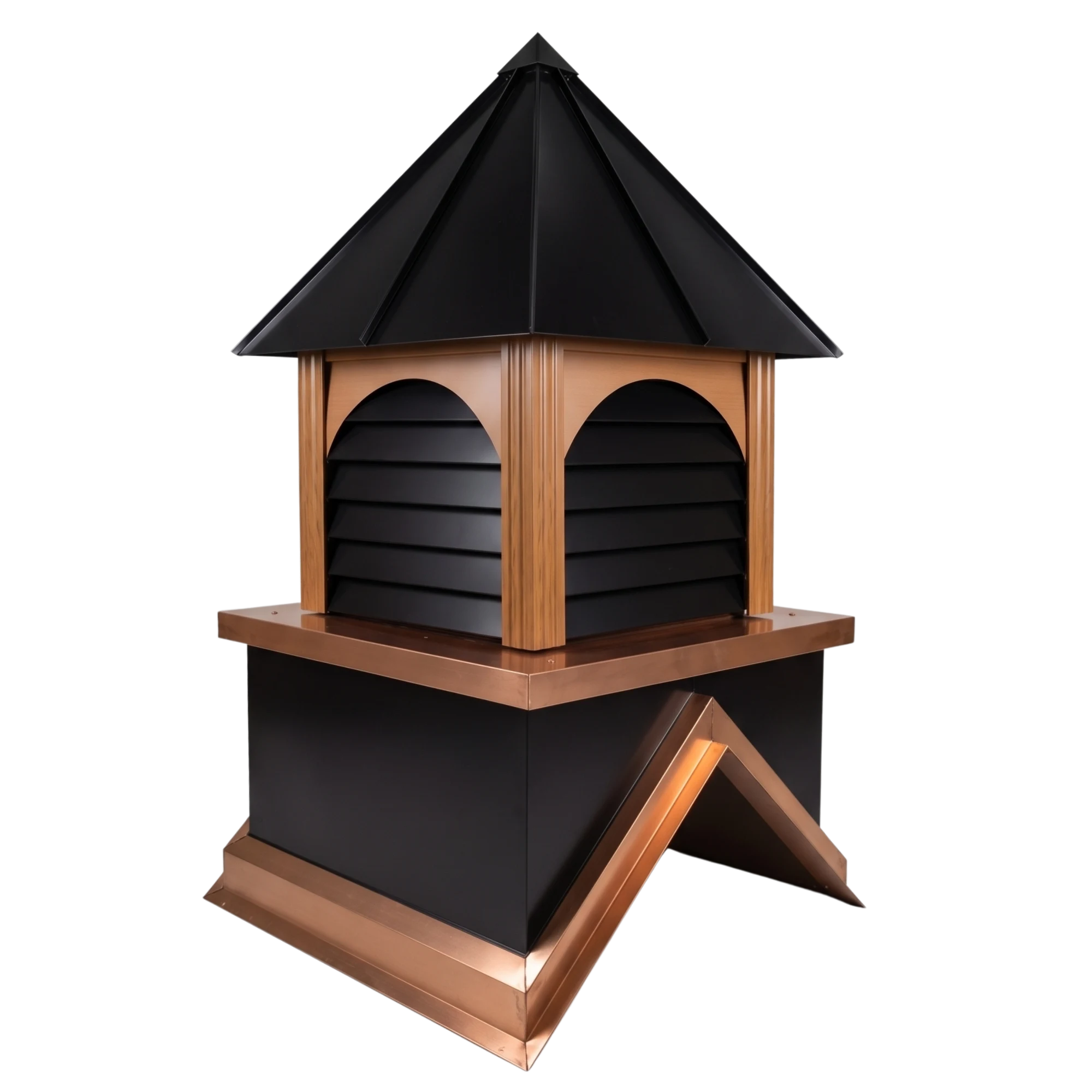
Every size comes in Classic, Select, and Signature. Classic and Select use louvered panels, so they vent and finish the roofline. Signature uses window panels for a residential look and does not vent. On a working barn, choose Classic or Select. Save Signature for when ventilation is already handled and the look is the point.
Sizing to the roofline
Cupolas are sized to the length of the roof, not to a stall count alone, and size is a separate choice from style. A short shed reads fine with one modest cupola; a long barn can carry a larger one, or more than one spaced down the ridge.
Pairing it with intake
A high exhaust only works if air can get in low. Soffit vents, wall vents, or an open eave feed the cupola. Match or exceed the cupola's opening at the intake and air moves through. On a barn that already has a continuous ridge vent, a cupola is mostly decorative, because two competing exhausts over one space tend to short-circuit the airflow.
Materials and durability
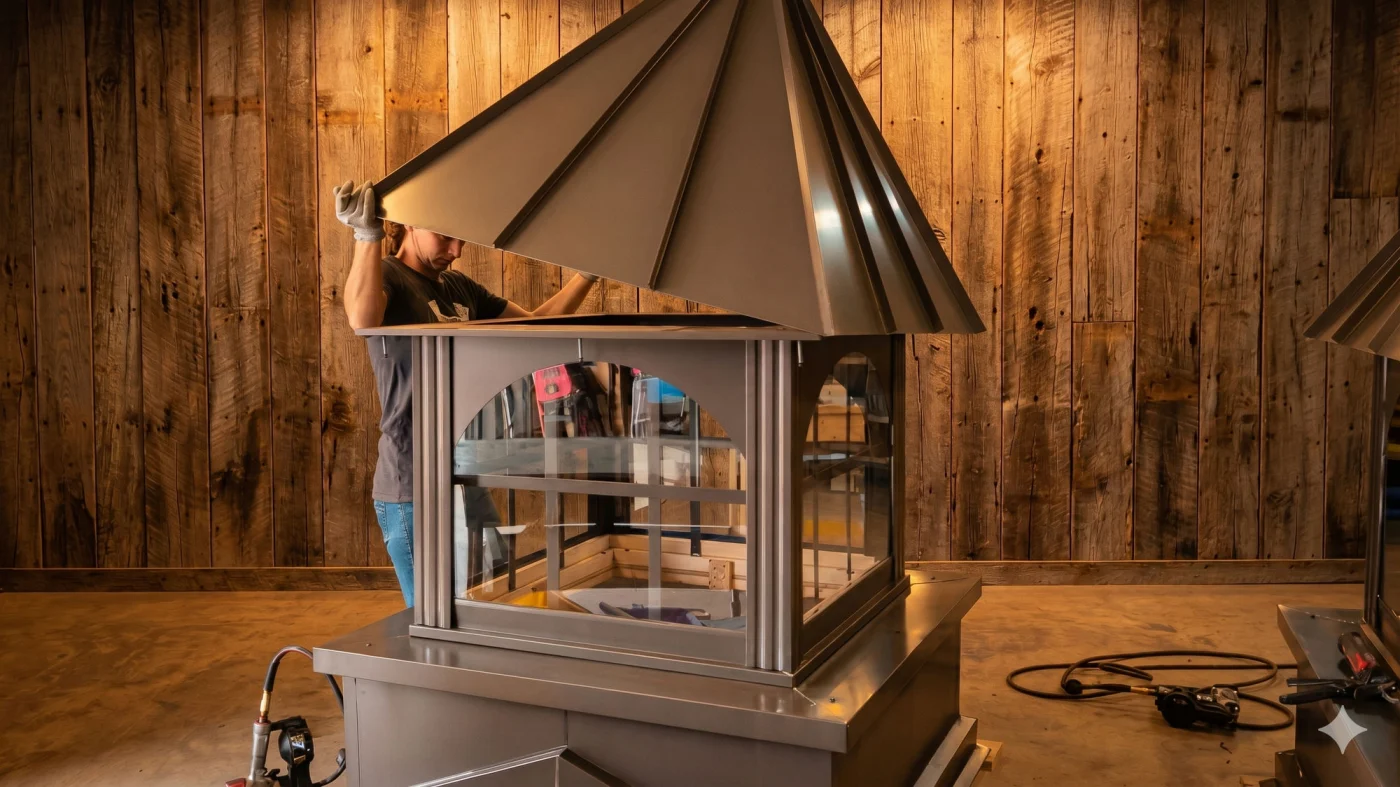
A cupola lives outside in weather for decades, so the build matters. Tanasi cupolas are framed in pine and roofed in 29-gauge steel, with steel louvers on Classic and Select and glass window panels on Signature. They ship fully assembled.
Put the right cupola on your barn
Send your roofline details and we will confirm the right size, style, ventilation approach, and insured freight.